Games and Rings
  • A Blog for Olympic Sports Fans

#StrongerTogether: The Right Hashtag for Tokyo 2020

6/22/2021

 
The International Olympic Committee unveiled an extended hype video - StrongTogether - for the upcoming Olympics ahead of tomorrow Olympic Day.

The setup: "More than a year ago, the world stopped, but there is one group of people who never stopped moving - the athletes of the Tokyo Olympic Games. It's time for us to cheer them on during the final days of their journey to Tokyo. As people, communities and a movement we are stronger together. Let's come together now; grow stronger together -- mentally, physically and in our communities; prepare together to celebrate the Tokyo2020 Olympic Games."

It's a fitting call to action, for Olympic Day, and for the upcoming Games that will take place under unprecedented pandemic times. It got my heartstrings going.

Watch it below.
View this post on Instagram

A post shared by The Olympic Games (@olympics)

A Look Back Through Olympic History

6/9/2021

 
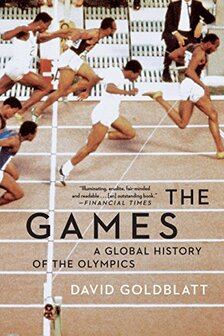
The Games: A Global History of the Olympics (2016)
A Quick Book Review

There seems to be a lack of new, independent publications on the history of the Olympic Games ahead of Tokyo 2020 this summer, so I revisited David Goldblatt's book, The Games: A Global History of the Olympics to help fuel my fandom.

It certainly did. The Games is an impressive read on the origins of Olympics, and takes the reader through the 120 years of the modern Games up to 2016, allowing appreciation for how far the Games have come - and the remarkable resilience of the Olympics as an institution.
Picture
Recounting the efforts of Pierre de Coubertin - inspired by various athletic contests such as the Cotswold Games, Much Wenlock Games, and Zappas Olympic Games, as well as, of course, the ancient Olympics - to bring together a modern version of Olympics, Goldblatt paints a vivid picture of de Coubertin's sense of sports as integral to a well-rounded education.

From that inspired start, the Games have persevered. Despite challenges from competitive "socialist" games, Nordic Games, separate women's games, and various bureaucracies and political challenges, the Olympic Games have grown from a sideshow to the most comprehensive and valuable sports property today.

Packaging Olympic history into different eras - e.g. the Games of the Belle Epoque period, post-World War I, tensions of depression and rise of fascism, post-World War II, start of the Cold War and post war re-branding, to a rapidly globalized era of economy and commercialism - The Games frames each Olympiad within the context of the socio-political forces at play in the world around them. One does get  a sense of what the Games mean to the psyche of organizers, participants, and fans as each chapter unfolds, and as each Games comes back to life. Sample lessons include understanding the positioning of Rome 1960 and Tokyo 1964 as opportunities to showcase new, rebuilt, post-WWII societies, and how Barcelona 1992 should be viewed as a culmination, rather than start, of a cultural rejuvenation effort.

Along the way, countless trivia and background facts are shared. London 1908 was originally to be Rome, (and 1904 St. Louis originally Chicago), Stockholm 1912 the first to be separated from a leading World's Fair, and many other firsts: the first parade of nations (the unofficial Athens 1906 Games), the first podium ceremony (Los Angeles 1932), official Olympic film (Berlin 1936), the first official poster without a human representation (Melbourne 1956), the first evening Opening Ceremony (Barcelona 1992), and much more. It's all endlessly fascinating for an Olympics fan.

Although not treated as extensively as Summer, the Winter Games are certainly included. Of note, Goldblatt offers a good summary perspective of the origins of key winter sports (skating, ice hockey, curling), and the tidbit that the first Winter edition - Chamonix 1924- were only packages as an Olympic Games retroactively. Also a reveal is that longtime Olympic president Avery Brundage actively did not like the Winter Games.

Reading The Games today, a glaring problem is wanting more. Published ahead of Rio 2016, The Games obviously doesn't cover the North Korean dilemma at Pyeongchang 2018, nor today's Covid-impacted Tokyo 2020. I also wonder how Goldblatt would retrospectively address the massive fallout from Beijing 2008 and London 2012 drug retesting, and Russia's drug manipulation at Sochi 2014.

I'm also struck by considering Antwerp 1920 as a recovery Games coming out of WWI. With the world not knowing what to expect, but needing an Olympics, I immediately thought of a parallel to Tokyo 2020 and the current pandemic. Similarly, there are lots of unknowns as to what the Games will be. But what they can be - an inspirational moment of community and resilience - is known.

Requiem for an Olympic Treasure

5/13/2021


Wherefore Art Thou, The Complete Book of the Olympics?

It's usually right around this time - about two months before the start of an Olympic Games - when I'd really get my Olympic fandom into overdrive with the purchase of the latest edition of The Complete Book of the Olympics or The Complete Book of the Winter Olympics.
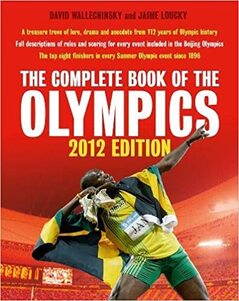
Picture2012 was the last edition for the Summer Games
As described in the inside cover of the London 2012 preview edition, these "encyclopedic" books had "anything anyone could ever need or want to know about the modern Olympic Games". And, boy, did they. Pages and pages - that 2012 edition came in at 1334 pages - of results, scores, and final rankings of each official Olympic event since 1896. Forgotten events, discontinued sports, newly added disciplines - they were all there.

And not only that, many results came with commentary on the results, often remarkable in detail. The listing for the infamous Los Angeles 1984 women's 3000 meters track event - i.e. Mary Decker vs Zola Budd - spans eight columns across five pages, offering a remarkable look at both the context and aftermath of the race. I devoured stories such as Cassius Clay's post-Rome 1960 victory experience, where continued discrimination back home soured his Olympic retrospective.

The books were a treasure trove of anecdotes, quotes, and obscure information. Did you know that Barcelona 1992 rowing gold medalist Marnie McBean first took up the sport by looking up "Rowing" in the Toronto phone directory at age 16? Or, that Japan's swim team at Los Angeles 1932 were the first to "inhale oxygen before and after their races"? Paris 1924 high diving (a discontinued event) champion Richmond Eve was eventually declared ineligible for future competition by a New South Wales association...of which his brother was secretary. One could go on and on...

​The books were a passion project of author and researcher David Wallechinsky, who fell in love with the Games in 1960. Possibly best known as the man behind The Book of Lists, Wallechinsky was well-built to tackle the data and insight of the Olympics ahead of the first publication in 1984. More than thirty years' worth of editions spanning both Summer and Winter Games followed, as The Complete Book became "the preeminent point of reference for sports enthusiasts and journalists alike", and the "essential companion to the greatest sporting festival in the world". Any other attempt at a Games preview paled in comparison.

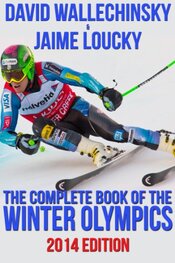
Picture The unfortunate last winter edition
​Wallechinsky received the Olympic Order in 2002 for his contributions to the movement, and was a founding member of the International Society of Olympic Historians.

However, Sochi 2014, unfortunately a production 
not up to standards of past, proved to be the last. Between the time commitment and weighing cost-effectiveness, Wallechinsky and team didn't offer a Rio 2016 version. Certainly, the research time needed increased substantially as, more and more, results changed years later across Games with the re-adjustment of results following various belated drug disqualifications. By January 2020 alone, there were 60 disqualifications from London 2012 and Beijing 2008 weightlifting. How can one keep up?

The dominant rise of the internet also undoubtedly played a part. Publishing, and adjusting, results is definitely easier online. Today, one can find results informally through Wikipedia, or through various blog-ish projects such as Olympstats.com, Olympiandatabase.com, Totallympics or even on the IOC's Olympics.org itself. Perhaps the closest inheritor to The Complete Book​'s perch is Olympedia, a wonderful backlog of results with athlete bios and more, offered by a consortium of Olympic researchers.

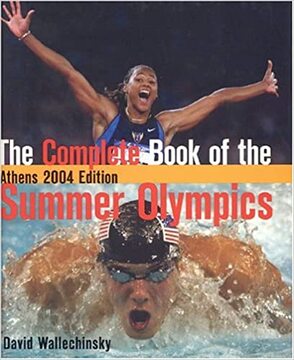
Picture$809 USD can get you a "new" 2004 edition (click on image)
But nothing compares to that feeling I had of holding the information in my actual hands, flipping pages back and forth to discover a new story, a new or favorite anecdote, a surprising result. I forgave Wallechinsky small irritants - his use of non-IOC national abbreviations (HOL vs NED, SPA vs ESP), and the sheer heft of the Summer Games book - in exchange for the sheer joy. It was an every-two-year ritual, thoughtfully replacing the previous edition with the newly published one on its place on the shelf.

I know that the books helped deepen my own Olympic passion, based on the hours spent cherishing what they offered. The 2012 and 2014 editions, despite continued post-Games disqualification changes to the results, still reside on my Olympic bookshelf, testaments to the place they have for me in Olympic fandom. As Tokyo 2020 approaches, I'm sure to revisit them.

The Olympics and the Cold War

5/1/2021

 
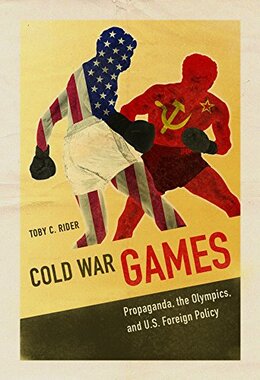
Cold War Games (Toby C. Rider, 2016)
​A Quick Book Review

​"...by the time the Cold War had started on its long course, the Olympic Games had become the largest and most prestigious international athletic festival in the world. That made it, in in turn, a perfect target for psychological exploitation."

Picture
So posits 2016's Cold War Games: Propaganda, the Olympics, and U.S. Foreign Policy by Toby C. Rider, as it explores the growing propaganda-through-sport efforts by the United States as the Cold War with the Soviet Union ramped up in post-World War II era.

Olympic idealists may cringe, but the modern Olympics were structured at the start that made national competitions inevitable. Aside from the recent Refugee Olympic Team*, entries are allowed only through national committees, and national pride and passion is what has historically driven a significant fandom of the Games.

So, as the Soviet Union eyed an Olympic debut at Helsinki 1952, it was increasingly apparent that the emerging world power viewed an opportunity for athletic success to showcase its perceived communist system's success, as it looked to establish relevance in a post-war world. And, the U.S. took notice.

How the U.S. took notice - and responded - in the late 1940s into the 1950s is the focus of Cold War Games. Rider provides a deeply researched look at three elements: how the U.S. looked to leverage the "peaceful internationalism" ideals of the Olympic movement to support western ideas of democracy, how the U.S. worked a public relations campaign within host cities, and the overall effort to leverage the Olympic structure. The Olympics became an element in U.S. foreign policy interest to "...win World War III without fighting it." (Crusade for Freedom's Abbott Washburn).

Presented as an academic study, Cold War Games is exceedingly relevant for those who remember the fever pitch of the U.S. vs Soviet storylines as the Games approached, reaching its peak with the boycotts of Moscow 1980 and Los Angeles 1984. It's a shame, then, that Rider doesn't take his study through that period - although such a reader can draw the line there.

While not strictly an Olympics-focused book - Cold War Games is best seen as an examination of foreign policy through the Games - there is great perspective on Helsinki 1952 and Melbourne 1956 within the context of the Cold War. It's great insight for Olympic and political history fans to digest.

*Perhaps one of the bigger revelations is the idea of a "Refugee Olympic Team" was first proposed in the immediate post-war years, focused on refugees and "non-state" athletes from war-torn European nations. The proposal, which was ultimately rejected by the International Olympic Committee, wasn't entirely altruistic, however, as the emphasis on Eastern European refugees - namely, those fleeing the Soviet-bloc - would have also served as a p.r. coup in the Cold War context.

Meet the Heroes of the Ancient Olympics

4/21/2021


An Olympic Adventure in Anime

Picture
The heroes of "Heroes" on The Olympic Channel
Heroes (2021)
A Quick Film Review

What's one great way to weave Japanese culture into Olympic education? Use anime!

Through The Olympic Channel's five-part series "Heroes" released earlier this month, viewers can quickly learn about a handful of figures from the ancient Olympic games. With each episode at about five minutes, it's a quick and fun way to help get into the Olympic spirit.
PictureMao (r) and Oly (l) en route to a new adventure in time
Heroes centers on Mao, a high school runner in Japan who is unsure of her athletic career. As she questions her future, she is visited by Oly, a floating spirit and the "bestower of the wisdom of Greece upon the troubled youth", who whisks her away through time and space to ancient Greece. There, she is witness to the legends of the Games, and finds renewed motivation.

The heroes she comes across include Leonidas of Rhodes (winner of three foot races in four Olympiads), Milon of Croton (six-time wrestling champion), Kyniska of Sparta (credited as the first female champion), Ageas of Argos (who ran home immediately to celebrate his running victory), and Pherenike of Rhodes (a mother who trained her son to box and watched him compete live).

It's quick, it's charming, and it's a good introduction for children (and some adults!) to some of the prominent names of the ancient Games. My wish is that there were more, longer episodes. Luckily, more information on the ancient Olympic Games can be found on olympic.org/ancient-olympic-games.

Picture
Milon of Croton receives adulation despite a loss
<<Previous
Forward>>
    Above: Athens' Kallimarmaro, the site of the 1896 Summer Olympics


    About This Blog

    An Olympics fan blog celebrating all things Olympic sport athletes

    Picture
    Read about me.

    Navigate It

    Celebrating Olympic sport athletes with news links, social media peeks, and more, seen through the cheeky lens of this particular, passionate fan.

    ​Check out:
     A Little Roundup
    Get to know the athletes of Olympic sports through a collection of links to recent news and feature stories

    Let's Get Social
    Take a look at what some of your favorite Olympic sport athletes are up to on social media, away from competition.

    They are the Champions
    Who made the podium in Olympic sports' world championships?

    Athletes Worth Watching
    Who are some emerging Olympic sport athletes worth keeping an eye on for the future?

    ​Ramblings and Things
    ​
    I have my own comment and opinions sometimes!

    A Quick Review
    Quick thoughts on Olympic sports-related films, art, books, TV, etc. that I've come across .
    p.s. see my Bookshop!

    Picture
    Me at Rio 2016's Barra Olympic Park


    Follow Me

    Instagram
    Twitter
    Threads
    ​Spotify
    Medium
    ​
    Bookshop
    Post.
    Mastodon
    ​Bluesky
    Tumblr

    Favorite Sites

    The IOC
    The Olympic Museum
    Olympic World Library
    ​Intl Olympic Academy
    ​Team USA
    World Athletics
    ​Athletics Integrity Unit
    WADA
    Court of Arbitration
    Around the Rings
    Inside the Games
    GamesBids.com
    The Sports Examiner
    ​AP Olympics
    ​AP Winter Olympics
    NBC Olympic Talk
    NY Times ​Olympics
    USA TODAY Olympics
    Wiki Summer Olympics
    Wiki Winter Olympics
    ​Athlete365
    ​
    Global Athlete
    ​Olympic Historians
    World Olympians Assoc.
    ​Games Architecture​
    Art of the Olympians
    Olympic.org Results
    ​Olympedia
    ​Olympstats
    ​
    Olympian Database
    ​On This Day in Sports
    ​Coubertin Speaks
    ​Olympic City Project
    ​
    Keep the Flame Alive
    Off The Podium
    The Games Odyssey
    ​Totallympics
    ​Qualifying to the Games
    ​Lost Olympians
    ​
    Olympians 1964 to 2020
    All Sports Books Reviews
    Outsports
    ​
    Queerstory Files
    ​Paris 2024
    ​Milan Cortina 2026
    Los Angeles 2028


    Categories

    All
    A Little Roundup
    Alpine Skiing
    Amsterdam 1928
    Ancient Olympics
    Aquatics
    Archery
    Artistic Swimming
    Athens 1896
    Athens 2004
    Athlete Spotlight
    Athlete Worth Watching
    Atlanta 1996
    Badminton
    Baseball
    Basketball
    Basketball 3x3
    Beach Volleyball
    Beijing 2008
    Beijing 2022
    Berlin 1936
    Biathlon
    Bobsled
    Boxing
    Breaking
    Canoe/Kayak
    Cricket
    Cross Country Skiing
    Curling
    Cycling
    Cycling BMX
    Cycling Mountain Bike
    Cycling Road
    Cycling Track
    Demonstration Sports
    Diving
    Equestrian
    Fencing
    Field Hockey
    Figure Skating
    Freestyle Skiing
    Golf
    Gymnastics
    Handball
    Helsinki 1952
    Ice Hockey
    Innsbruck 1976
    IOC
    Judo
    Karate
    Lacrosse
    Let's Get Social
    London 1908
    London 1948
    London 2012
    Los Angeles 1932
    Los Angeles 1984
    Los Angeles 2028
    Luge
    Melbourne 1956
    Mexico City 1968
    Milano Cortina 2026
    Modern Pentathlon
    Montreal 1976
    Moscow 1980
    Munich 1972
    Non-Olympic Sports
    Nordic Combined
    Olympics
    Olympic Sports Media
    On This Date
    Other
    Paralympics
    Paris 2024
    Pyeongchang 2018
    Rhythmic Gymnastics
    Rio 2016
    Rome 1960
    Rowing
    Rugby Sevens
    Sailing
    Salt Lake City 2002
    Sarajevo 1984
    Seoul 1988
    Shooting
    Short Track Speedskating
    Skateboarding
    Skeleton
    Ski Jumping
    Ski Mountaineering
    Snowboarding
    Soccer (football)
    Sochi 2014
    Softball
    Speed Skating
    Sport Climbing
    Squash
    Stockholm 1912
    Summer Olympics
    Surfing
    Swimming
    Sydney 2000
    Table Tennis
    Taekwondo
    Tennis
    They Are The Champions
    Tokyo-1964
    Tokyo-2020
    Track And Field
    Trampolining
    Triathlon
    Volleyball
    Wada
    Water Polo
    Weightlifting
    Winter-olympics
    Wrestling


    Archives

    March 2024
    February 2024
    January 2024
    December 2023
    November 2023
    October 2023
    September 2023
    August 2023
    July 2023
    June 2023
    May 2023
    April 2023
    March 2023
    February 2023
    January 2023
    December 2022
    November 2022
    October 2022
    September 2022
    August 2022
    July 2022
    June 2022
    May 2022
    April 2022
    March 2022
    February 2022
    January 2022
    December 2021
    November 2021
    October 2021
    September 2021
    August 2021
    July 2021
    June 2021
    May 2021
    April 2021
    March 2021
    February 2021
    January 2021
    December 2020
    November 2020
    October 2020
    September 2020
    August 2020
    July 2020
    June 2020
    May 2020
    April 2020
    August 2016
    July 2016
    June 2016
    May 2016
    April 2016
    March 2016
    February 2016
    January 2016
    December 2015
    November 2015
    October 2015
    September 2015
    August 2015
    July 2015
    June 2015
    May 2015
    April 2015
    March 2015
    January 2015
    December 2014
    November 2014
    October 2014
    September 2014
    August 2014


    To opt-out of cookies, and to read this site's privacy policy, read the Policy page.

    The following link is listed for Mastodon site verification purposes only:
    Mastodon

    RSS Feed


Proudly powered by Weebly